Patek PhilippeGenève · current collection · an editorial
Powered by Stafford Consulting

Patek PhilippeGenève · est. 1839

Four ways to break
a rule beautifully

A square case from a house that spent two centuries on the circle. A steel sports watch that cost more than gold. A calendar hand that flies backwards. A dial made of fire and glass. Four ideas from the current collection, each given its own room.

CubitusNautilusRetrograde PerpetualGrand Feu

▼ Enter

Four rooms

Every room breaks one rule

Patek Philippe is usually described by what it keeps: the Seal, the hand-finishing, the Geneva address. This walk is about the four places where the house chose to let go of something — and what it built on the other side.

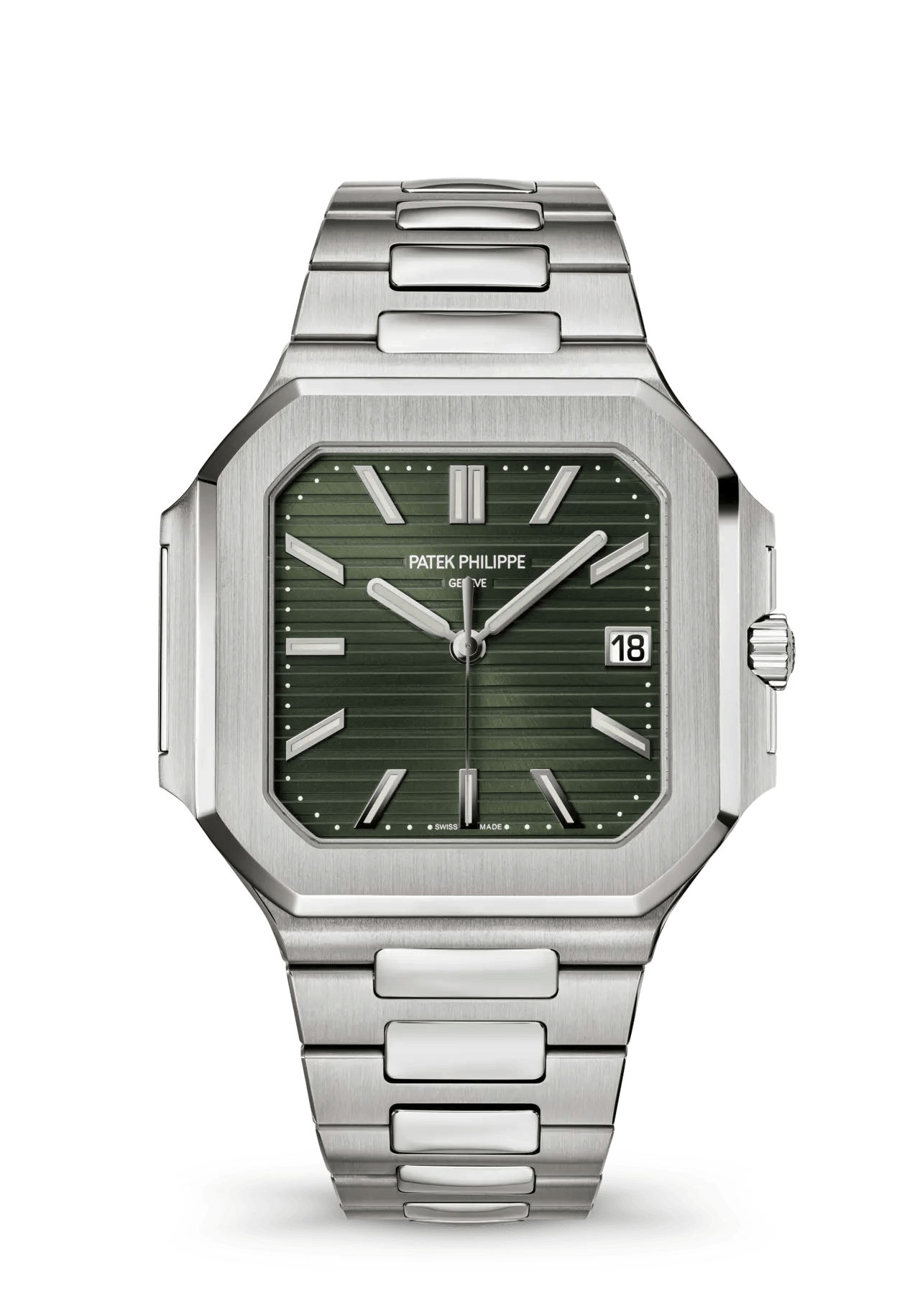
Patek Philippe Cubitus 5821/1A-001 in steel with an olive green dial
5821/1A-001 · Steel · Olive green sunburst · Cal. 26-330 S C

Room I · The rule of the circle

A square, from
the house of circles

Cubitus · introduced October 2024

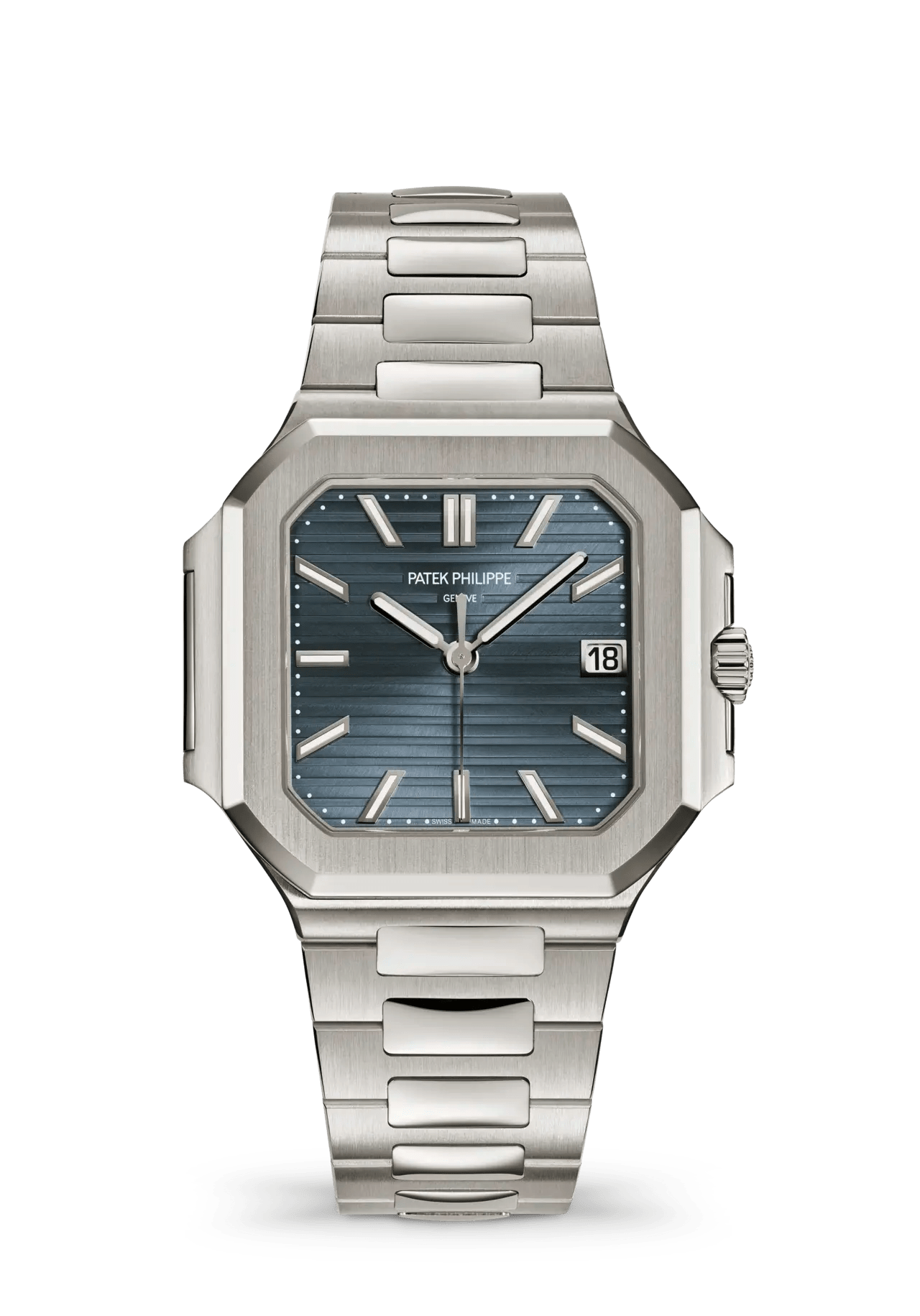
Patek Philippe had not launched a new collection in twenty-five years. When it did, it chose the one shape the brand had never built its name on: a square with softened corners, forty-five millimetres across.

The lineage is deliberate. The bezel's flat sides and rounded corners, the horizontal embossed dial, the integrated bracelet with its patented fold-over clasp — all of it reads as Nautilus grammar spoken in a new geometry. The first three references arrived together: steel with an olive green dial, steel and rose gold with blue, and a platinum grand-date version with a movement built for it.

45 mm10-to-4 o'clock
8.3 mmThickness
207Movement parts
4 Hz28,800 vph
Room I · The range

Three cases, two movements,
one new shape

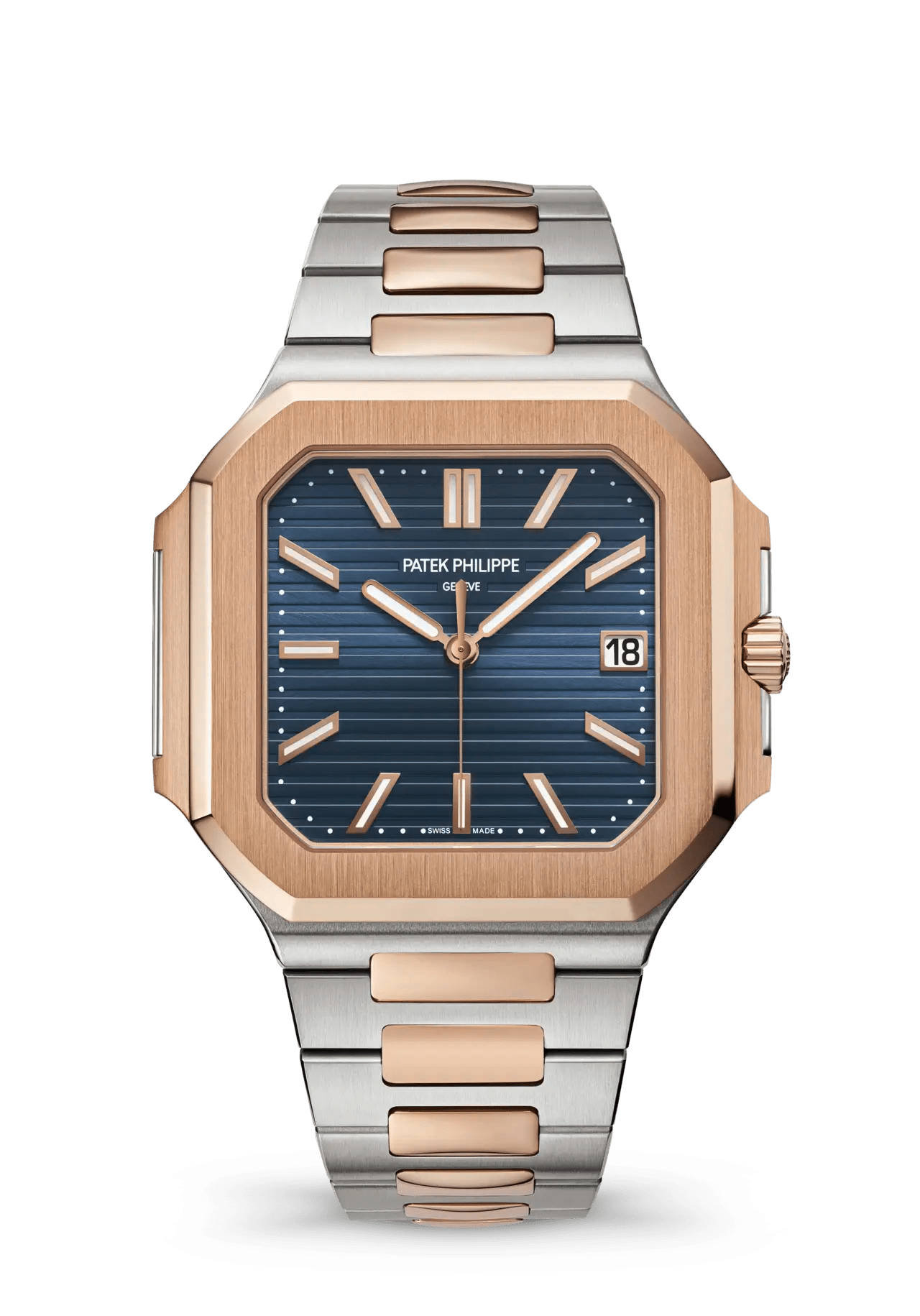
Cubitus 5821/1AR-001 in steel and rose gold
5821/1AR-001Steel & rose gold · blue · date, sweep seconds
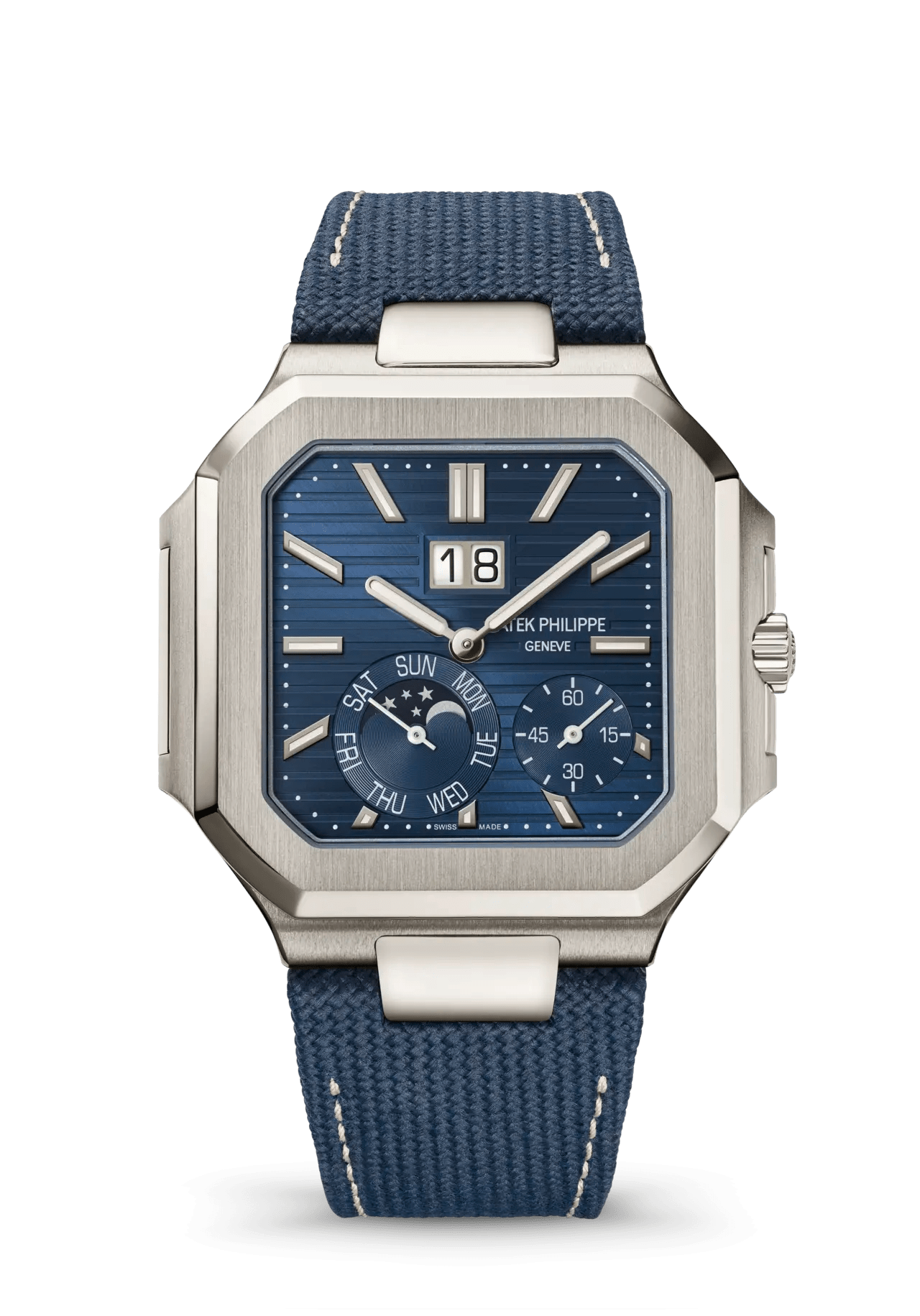
Cubitus 5822P-001 in platinum with grand date, day and moon phases
5822P-001Platinum · grand date, day, moon · 353 parts
Cubitus 7128/1G-001 in white gold, 40 mm
7128/1G-001White gold · 40 mm · the smaller Cubitus

Why it mattersThe 5822P is the tell. Its instantaneous grand date, day and moon phase jump together at midnight on a movement — the 240 PS CI J LU — that did not exist before this case. A house does not build a new calibre for a shape it intends to abandon.

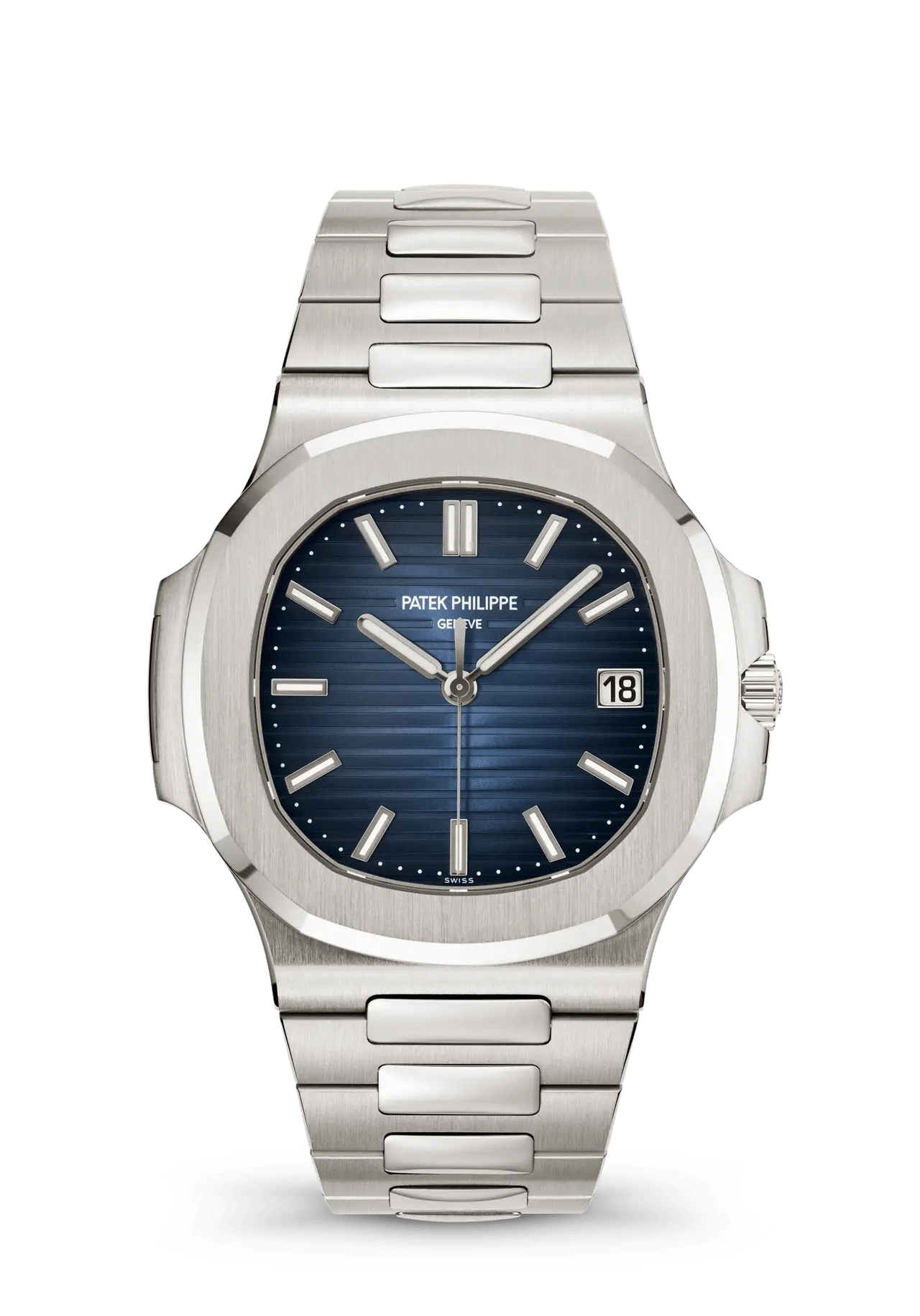
Patek Philippe Nautilus 5811/1G-001 in white gold with a blue dial
5811/1G-001 · White gold · 41 mm · Cal. 26-330 S C

Room II · The rule of precious metal

A porthole,
opened in 1976

Nautilus · designed by Gérald Genta

The first Nautilus was steel, forty-two millimetres wide, and priced like gold. The advertising said the quiet part out loud: one of the world's costliest watches is made of steel.

Genta drew the case from a ship's porthole — an octagonal bezel softened at the corners, held to the case by two hinge-like "ears" at nine and three. The dial carried horizontal relief stripes that caught light like water. Fifty years on, the 5811 in white gold keeps every one of those decisions and adds only what the wrist asked for: a slimmer profile and an adjustable clasp.

41 mm10-to-4 o'clock
8.2 mmThickness
21KGold central rotor
45 hMax. power reserve
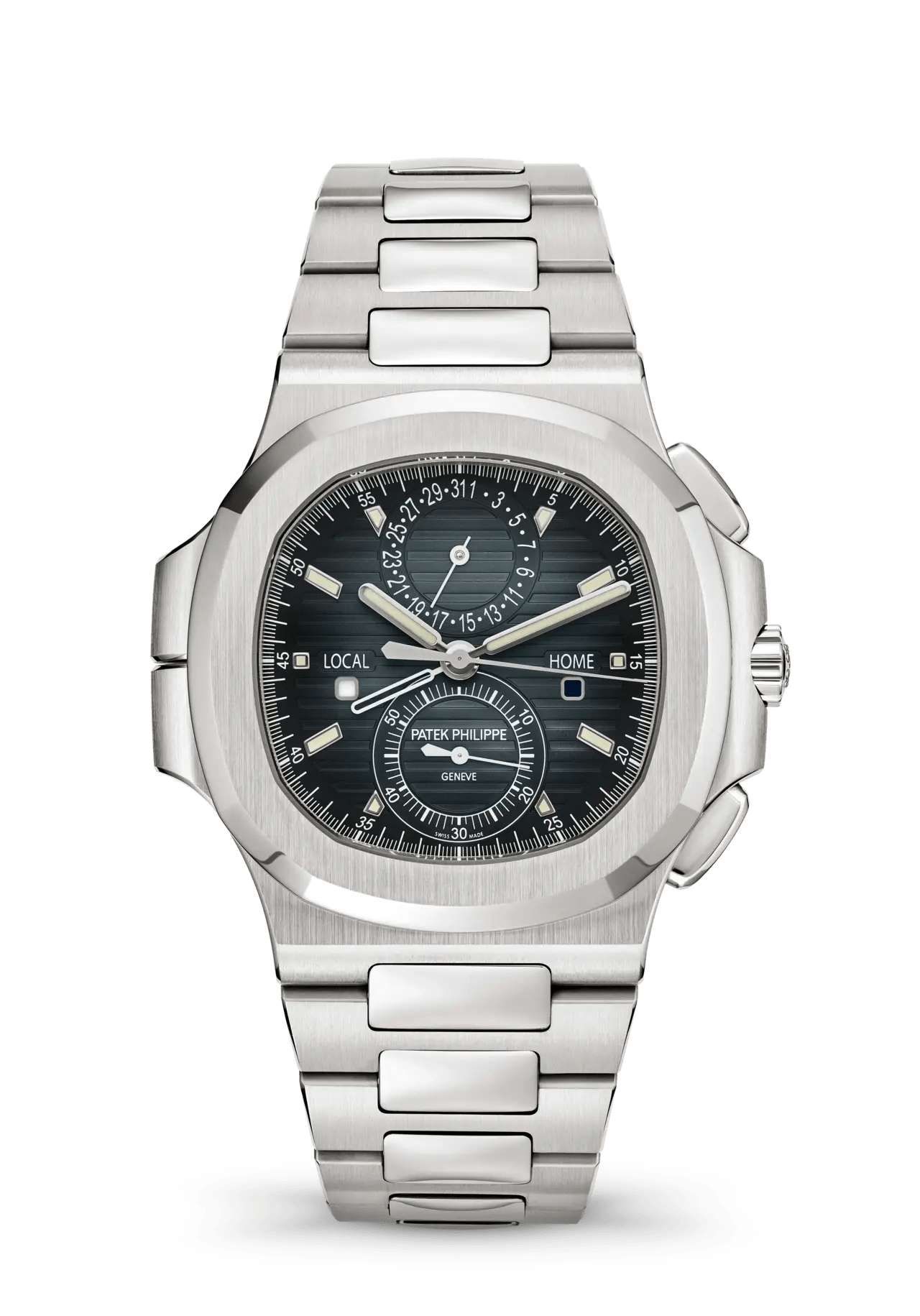
Patek Philippe Nautilus Travel Time Chronograph 5990/1A-011 in steel
5990/1A-011 · Steel · Flyback chronograph · Two time zones

Room II · Complication in steel

The sports watch
that travels

Nautilus Travel Time Chronograph

Patek Philippe rarely puts a serious complication in steel. The 5990 is one of the exceptions — and it carries two at once.

A flyback chronograph with a 60-minute counter shares the dial with a second time zone: local and home hours, each with its own day-night aperture, and a date that stays coupled to local time as you cross the line. The pushers at eight and ten move the local hour in one-hour jumps without touching the minutes. Forty and a half millimetres, twelve and a half thick — a lot of watch on a wrist, and a lot of watch inside it.

40.5 mmDiameter
12.53 mmThickness
2Time zones
60 minChrono counter
1 8 16 24 31 RETROGRADE DATE · 1 → 31 → 1

Room III · The rule of the clockwise hand

A hand that
flies backwards

Retrograde perpetual calendar

Every hand on a watch goes round. A retrograde hand goes across — sweeping an arc from 1 to 31, then, at midnight on the last day, snapping back to the start in a fraction of a second.

Put that on a perpetual calendar and the mechanism has to know how long each month is, including February in a leap year, so the hand jumps home from 28, 29, 30 or 31 without being told. Patek Philippe's 26-330 S QR does this with 368 parts, and the return spring has to be strong enough to throw the hand across the dial and gentle enough not to bounce it.

The wordRetrograde is Latin for "stepping backwards." On a dial it means the one moment each month a Patek hand is allowed to move the wrong way.

Room III · Two readings of the same calibre

Engraved by hand, or
seen through smoke

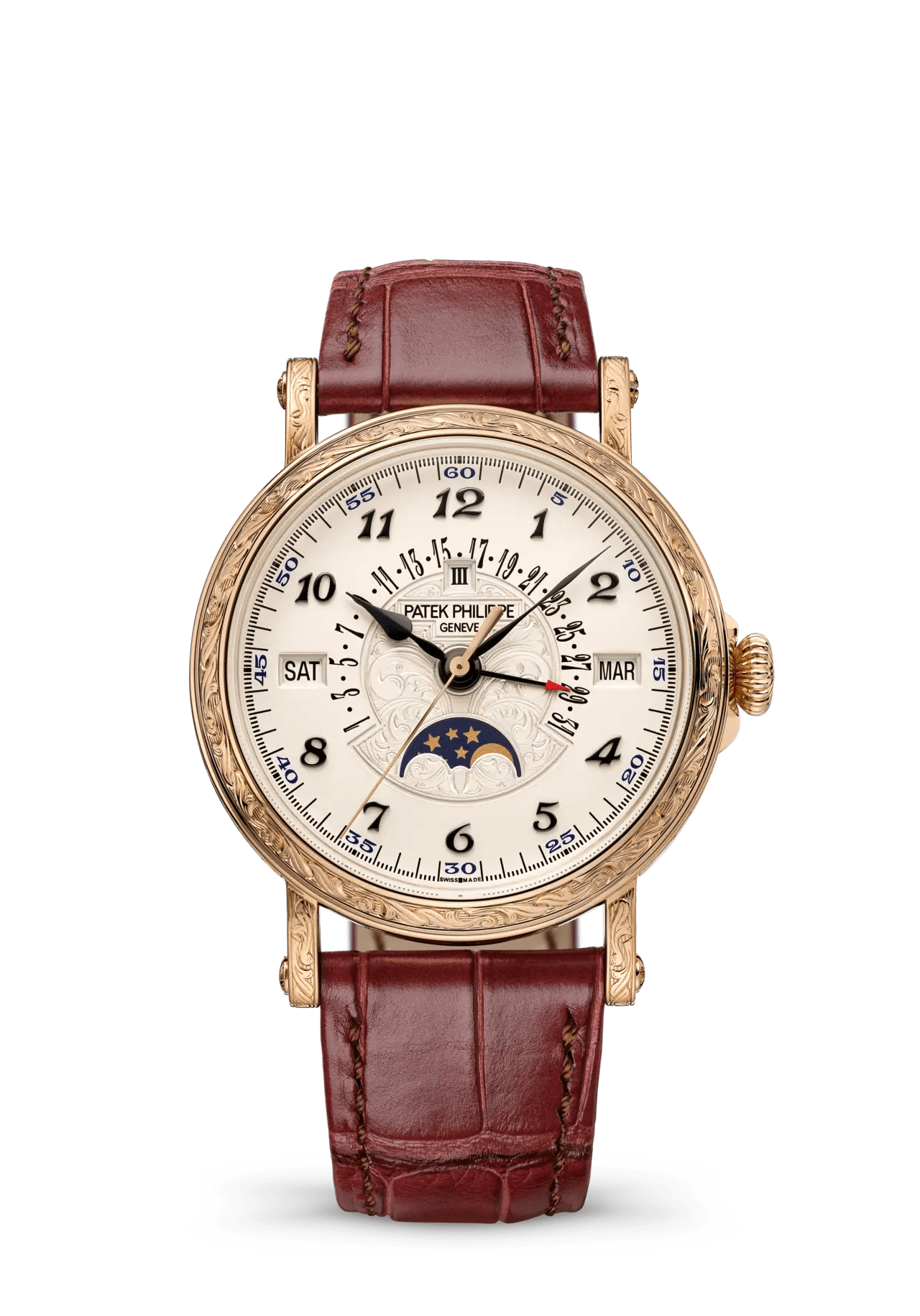
Patek Philippe 5160/500R-001 retrograde perpetual calendar with hand-engraved rose gold case
5160/500R-001Rose gold · 38 mm · hand-engraved officer's case with hinged dust cover
Patek Philippe 6159G-001 retrograde perpetual calendar with smoked sapphire dial
6159G-001White gold · 39.5 mm · smoked sapphire dial over the calendar works · Clous de Paris

Same heart, opposite skinBoth run the 26-330 S QR. The 5160 hides its works behind a hand-engraved dust cover in the manner of a nineteenth-century officer's watch; the 6159 puts a smoked sapphire dial over them so the calendar wheels show through the tint. One looks back, one looks in.

Room IV · The rule of the dial as a surface

Glass, ground fine,
and put to the great fire

Grand Feu — "great fire" — is enamel the old way: powdered glass, tinted with metal oxides, laid on gold and fused in a kiln at around 800 °C. Not once. Again and again, one colour at a time, and any firing can crack everything that came before it.

01Cloisonné

Fine gold wire is bent by hand into the outline of the picture and fixed to the dial, forming cells. Each cell is filled with a different enamel.

02Flinqué

Translucent enamel is fired over a hand-guilloched surface, so the engraved pattern glows up through the colour.

03Paillonné

Tiny leaves of gold — paillons — are set beneath a transparent layer, so light bounces from inside the glass.

04The firings

Ten, fifteen, twenty passes through the kiln. Each one is a chance to lose the dial. That risk is the price on the ticket.

Room IV · Rare Handcrafts, 2026

Three dials that were
painted with fire

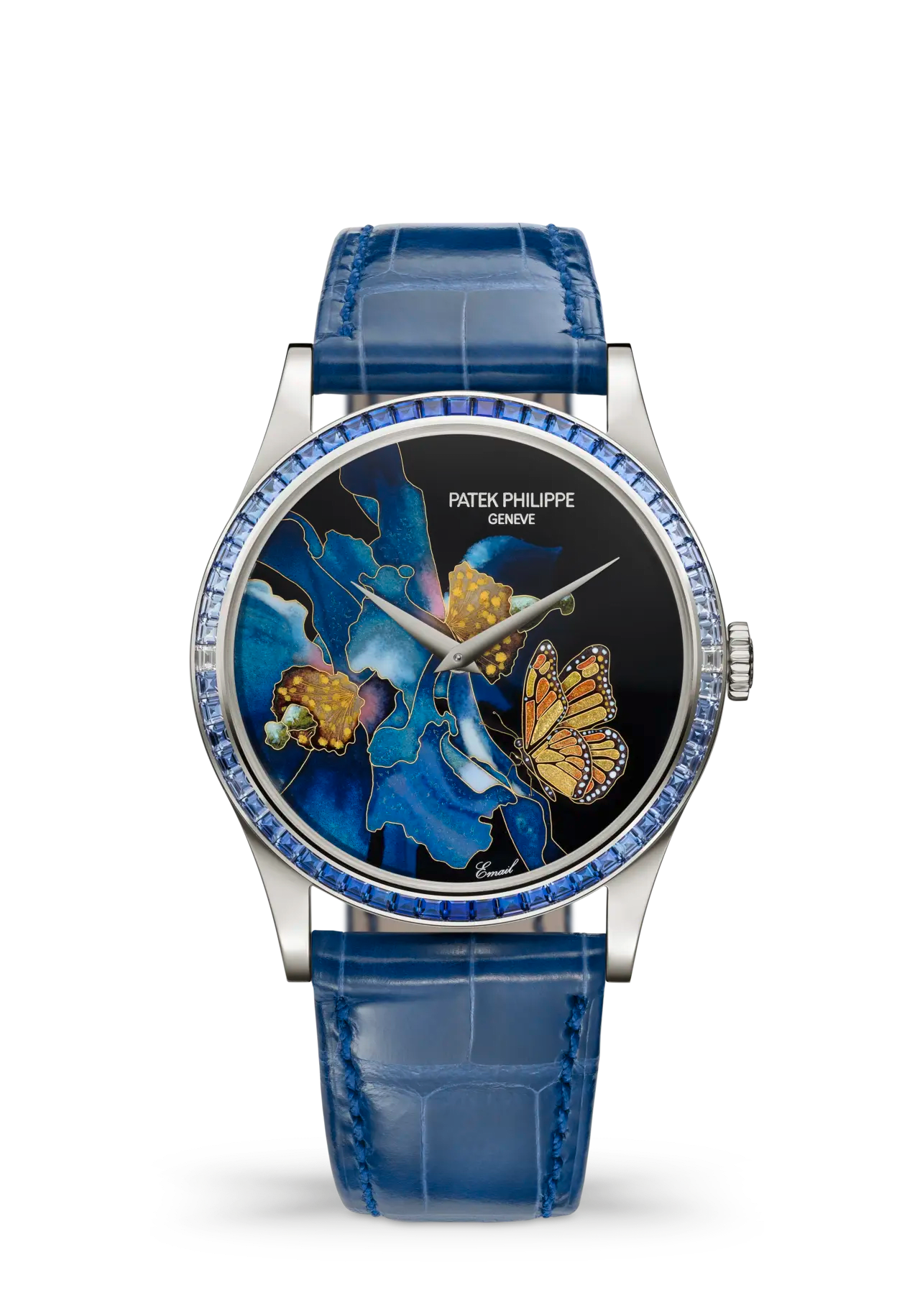
Patek Philippe Calatrava 5077/357G-001 Blue Butterfly with cloisonné enamel dial
Blue Butterfly5077/357G-001 · cloisonné & paillonné · 47 cm of gold wire · 32 colours · edition of 10
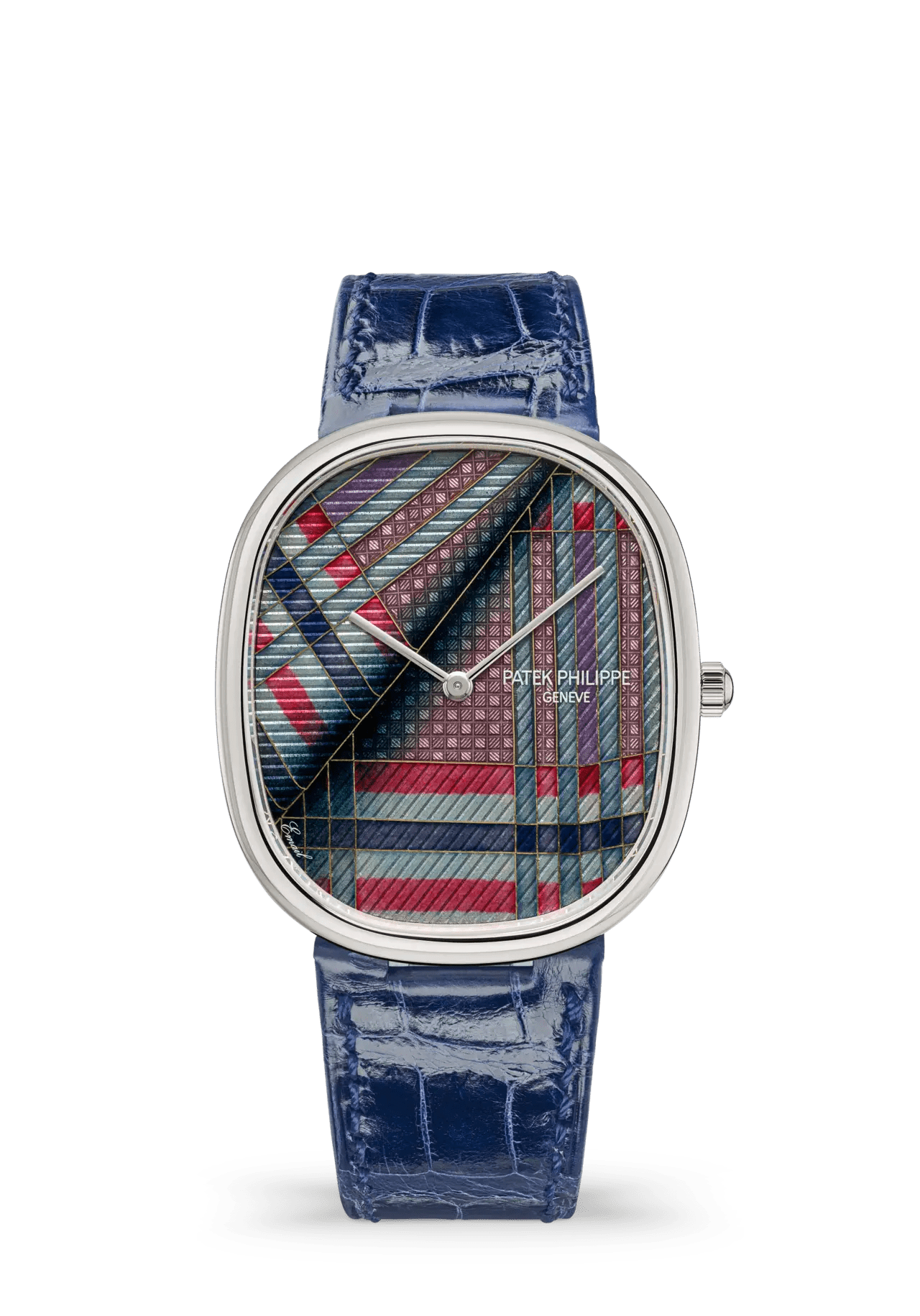
Patek Philippe Golden Ellipse 5738/50G-045 Blue Tartan with cloisonné and flinqué enamel dial
Blue Tartan5738/50G-045 · cloisonné & flinqué over hand guilloché · edition of 10
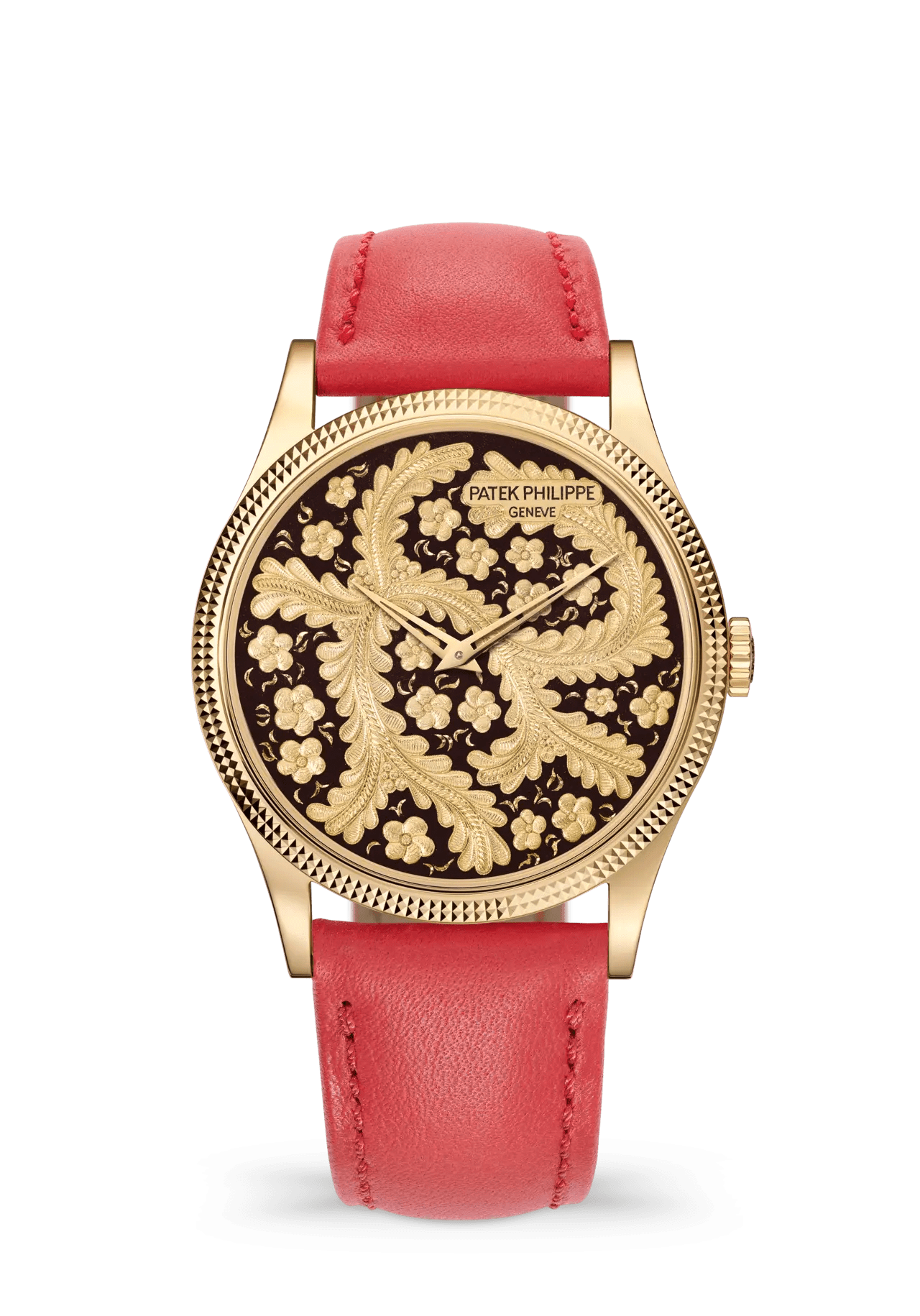
Patek Philippe Calatrava 5177J-001 Matador with hand-engraved dial
Matador5177J-001 · yellow gold · hand-engraved dial

The arithmetic of a butterflyThe Blue Butterfly's outline took about 47 centimetres of gold wire — a fifth of a gram — bent by hand into the petals of a Himalayan poppy and the wings of a monarch, then filled with 32 enamels: transparent, opalescent, opaque and semi-opaque, with beads of orange and white fired into the wings for depth. Ten will be made.

Exit

Keep the circle.
Break it once, well.

A square that speaks Nautilus. Steel that outprices gold. A hand that runs the wrong way for one second a month. A dial that has been to the fire twenty times. None of it is rebellion — every one is a rule kept everywhere else, so that breaking it here would mean something.

Watch photography © Patek Philippe SA, shown from patek.com for editorial commentary. Technical figures from the manufacturer's published specifications for each reference.
Patek Philippe, Cubitus, Nautilus, Calatrava, Golden Ellipse, Gyromax and Spiromax are trademarks of Patek Philippe SA. This is an independent editorial presentation and is not affiliated with or endorsed by Patek Philippe.
Text, layout and code © 2026 Stafford Consulting.

Powered by Stafford Consulting · staffordconsultingsc.com