A Gallery Walk · Ten Rooms · 1863–1962
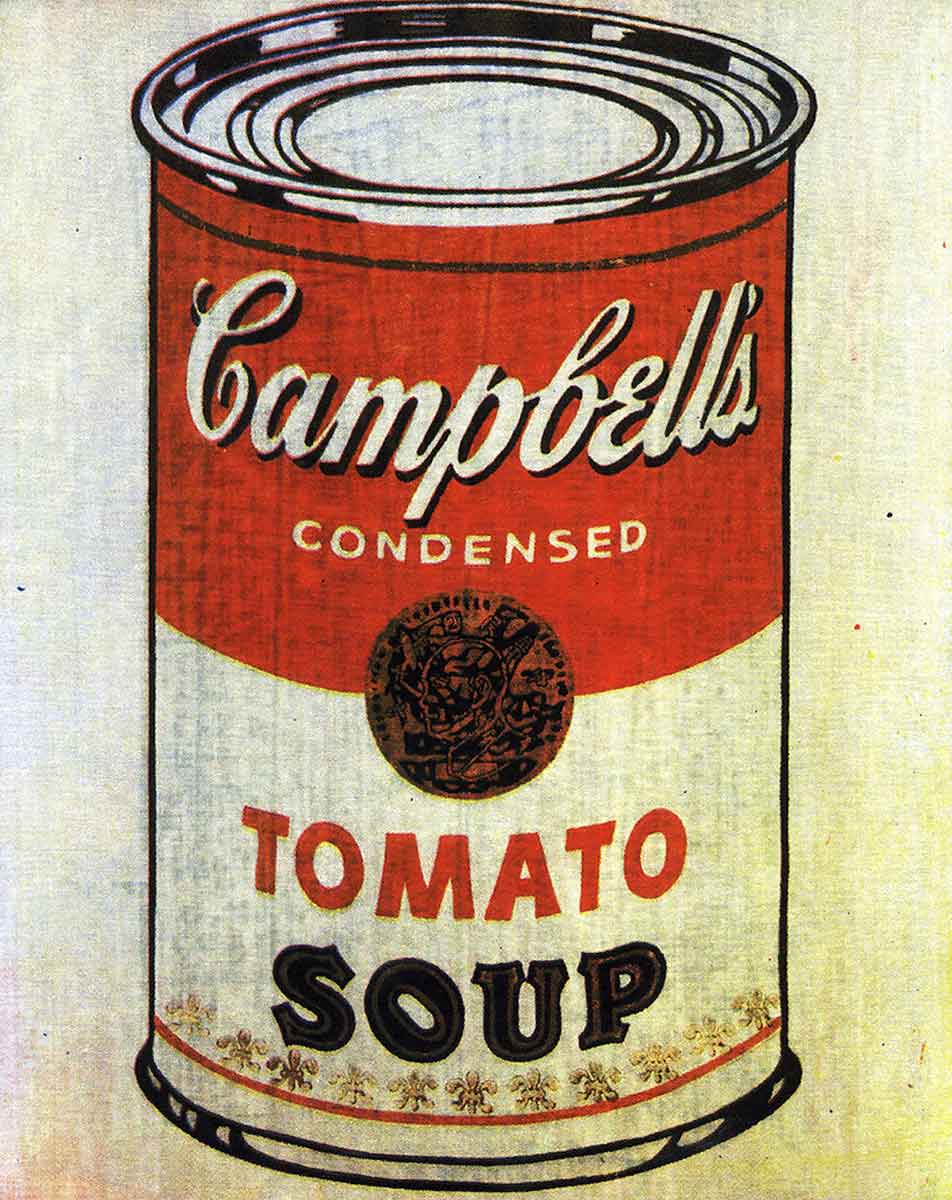
This is where the story ends: thirty-two soup cans on a white wall. To understand how art got here, we walk backwards through the door — into a green-walled Paris salon in 1863 — and watch every room shed a rule on the way out. The walls, the frames, even the lettering of this page will modernize with the art.
Powered by Stafford Consulting · after Miles McMorrow, TheCollector
▼ Enter the Salon, 1863
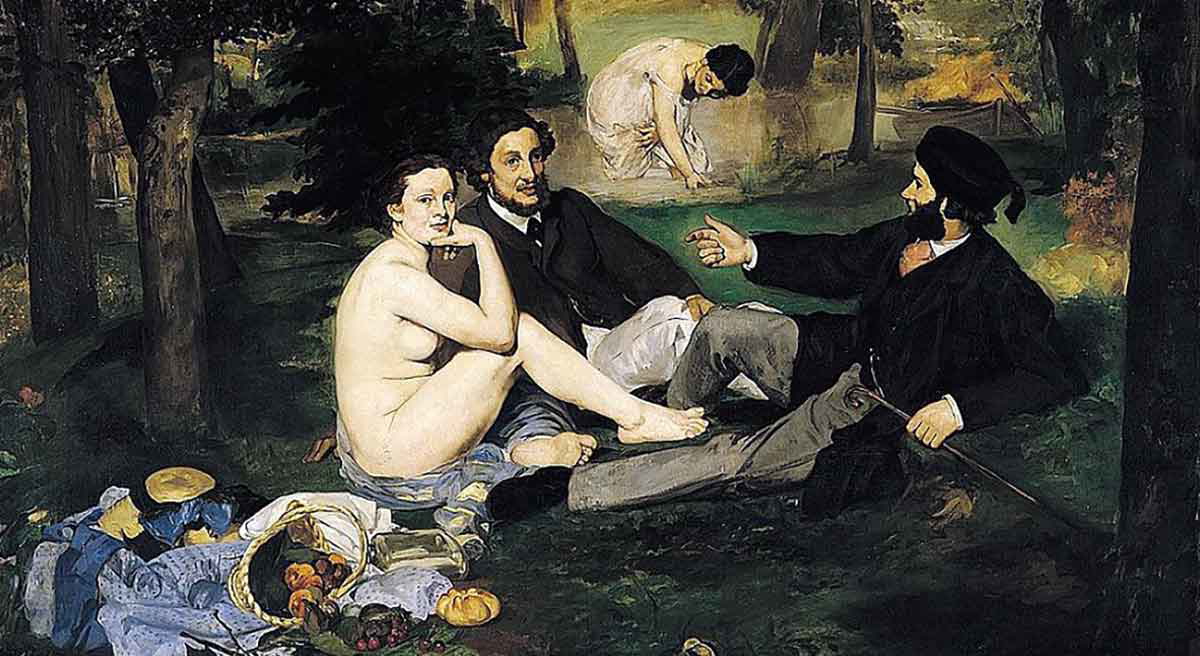
Le Déjeuner sur l'herbe — É. Manet
Room I · The Salon des Refusés
Two clothed gentlemen picnic beside a nude who is nobody's Venus — an unidealized, modern Parisian woman looking straight out at you. Rough brushwork, flat light, a depth that refuses to behave: every polish the Academy demanded, withheld on purpose. The official Salon rejected it; the Salon des Refusés — the exhibition of the refused — hung it, and art history pivots on that wall.
Manet's method was borrowed grandeur: compositions lifted from Titian and Raphael, with the gods swapped out for everyday Parisians and scandalous modern subjects. The present tense had entered painting, and it would never leave.
Why this room mattersReplacing myth with modern life made "now" a legitimate subject — the founding gesture of Modernism, and the reason 1863 starts the clock.
Powered by Stafford Consulting
Room II · Les Arts Incohérents
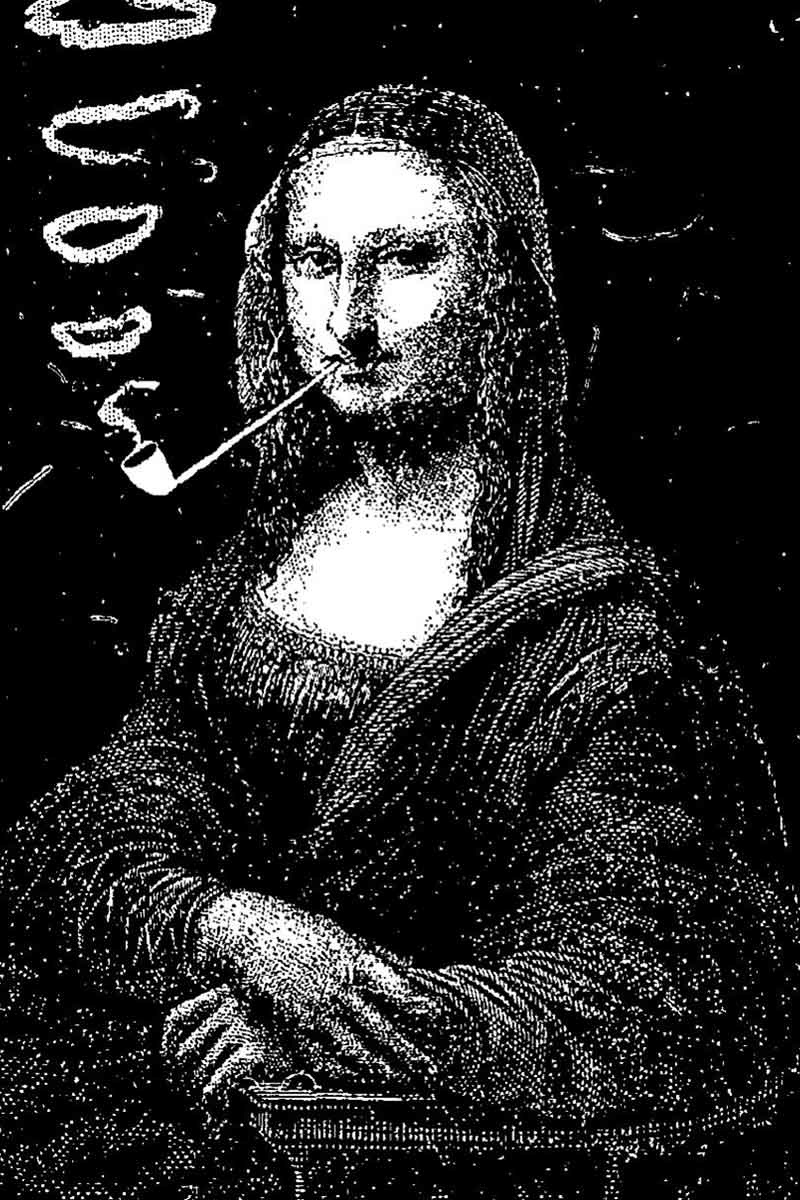
Jules Lévy's Incoherents believed art should be witty and available to everyone — so they published cartoons in widely circulated journals rather than courting the salons. Their sharpest graphic artist, Eugène Bataille (pen name Sapeck), took the most venerated portrait on Earth and gave her a pipe for the journal Le Rire.
The gag has teeth. It's iconoclasm in the plainest sense — image-breaking — the revolutionary spirit sweeping 18th- and 19th-century Europe carried into the museum. Modern artists would spend a century tearing down what came before; Sapeck just did it grinning. Three decades later Duchamp added a mustache to the same lady and a title that, read aloud in French, makes a very rude pun. The joke had become a lineage.
Why this room mattersAppropriating a masterpiece to puncture its status became one of Modernism's favorite moves — you'll see it again in Rooms VIII and X.
Mona Lisa fumant la pipe — Sapeck
Powered by Stafford Consulting
Room III · The Frame Grows Plainer
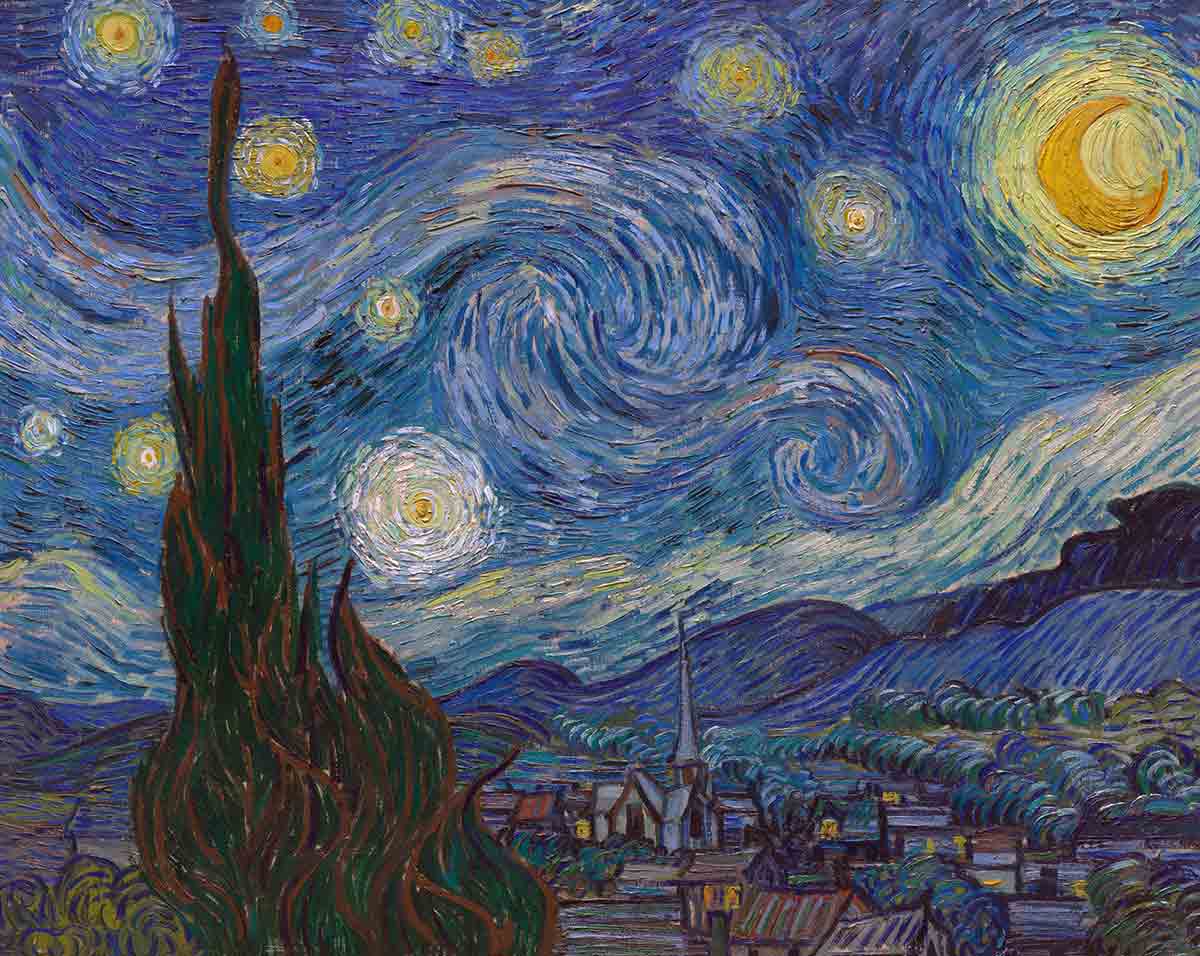
Painted at the Saint-Paul-de-Mausole asylum a year before his death, this is no view from a window — it's the east-facing window plus memory plus emotional imagination, churned into waves of cobalt and indigo around eleven swollen stars and a crescent moon, the paint ridged thick with impasto.
The Impressionists had chased light as it objectively fell. Van Gogh bent color and form to show what a mind feels instead — and the century took notes. German Expressionists mined his brushwork for anxiety and inner conflict; Matisse and the Fauves ran with his liberated, non-natural color.
Industrial secretThe blazing palette rode on newly mass-produced synthetic tube pigments — Chrome Yellow, Cobalt Blue — the Industrial Revolution smuggled into art history.
Powered by Stafford Consulting
Room IV · The Wall Itself Fractures
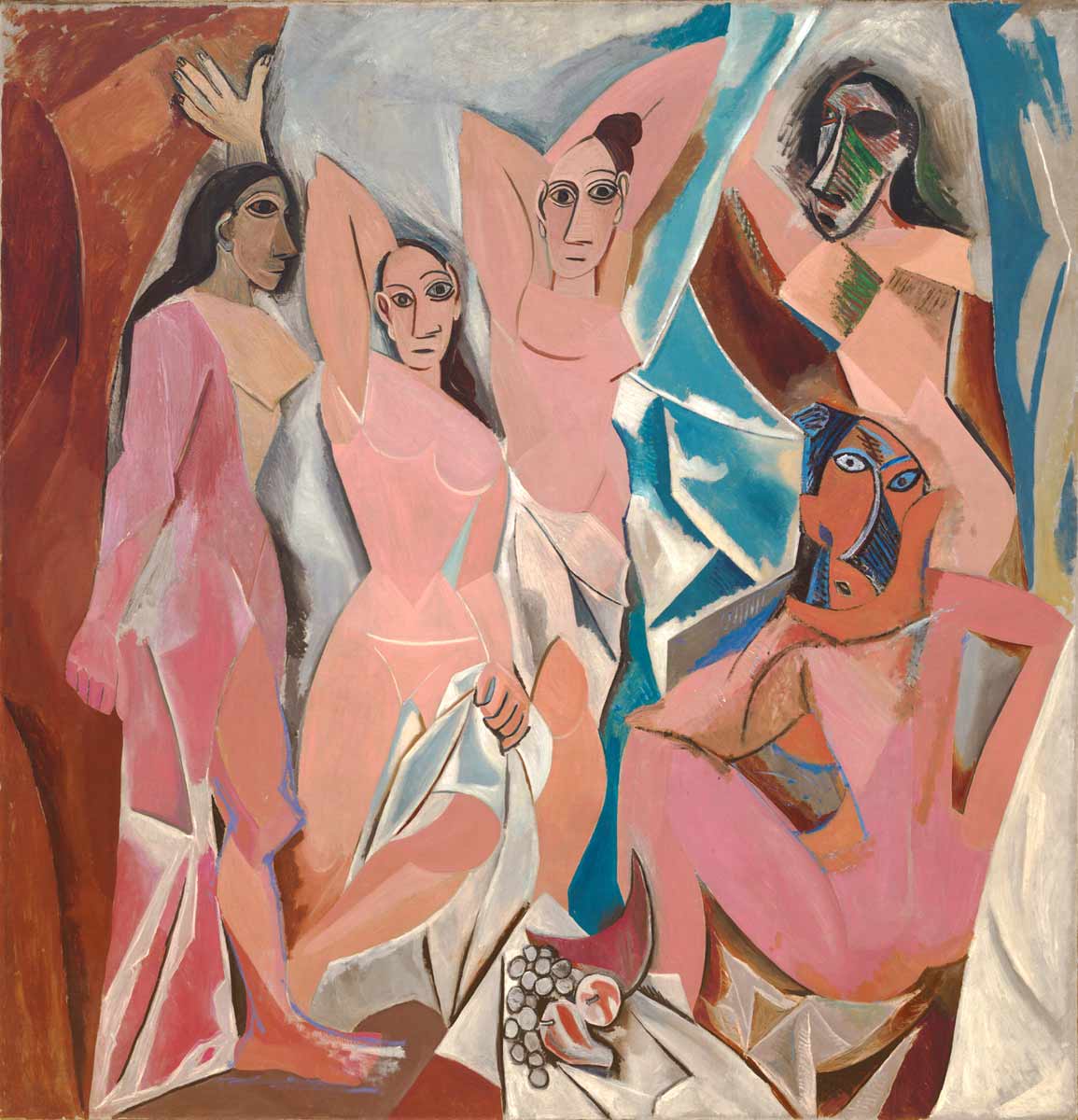
Eight feet of canvas, five figures from a brothel on Barcelona's Carrer d'Avinyó — and the end of four hundred years of Renaissance perspective. Bodies snap into jagged, razor-edged planes; the two faces at right are built from the forms of African masks, used as serious visual grammar rather than exotic décor.
This is widely held to be the sharpest break in 20th-century art — the starting gun for abstraction. Its flattened space became Cubism, developed with Braque over the following years. Even Picasso's own avant-garde circle — Matisse, Braque — recoiled at first sight, which tells you exactly how far outside the fence it landed.
Restless by designBlue, Rose, African-influenced, Analytic Cubist, Synthetic Cubist, Neoclassical, Surrealist — Picasso burned through styles the way others signed their names, redefining artistic freedom itself.
Powered by Stafford Consulting
Room V · The Serifs Fall Away
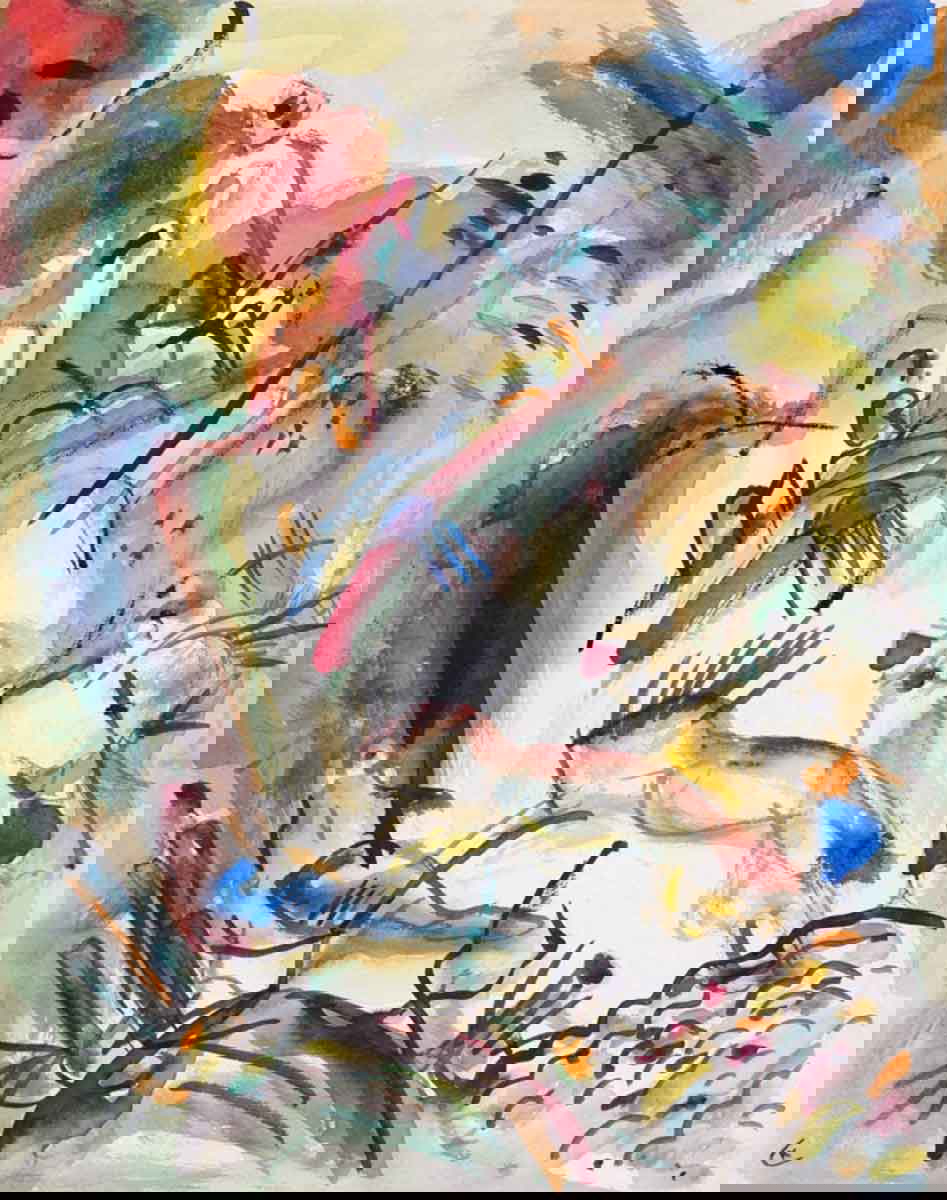
"What is he trying to show?" is the natural first question, and it's the wrong one. Kandinsky — who founded Der Blaue Reiter with Franz Marc and helped pioneer German Expressionism — pushed abstraction past the point of recognition into pure non-representation. What's on the canvas gives way entirely to how it's there.
His instrument was color. A self-described synesthete, he heard hues: red aggressive and advancing like a blast of brass, blue calm and receding. Set them opposite one another — look at this work's upper corners — and the whole canvas tilts into engineered disharmony. Hold that key and his paintings begin to play.
Cross-wired sensesHe literally saw colors when he heard music and heard tones when he looked at art — and structured paintings like musical compositions.
Powered by Stafford Consulting
Room VI · The Pedestal Replaces the Frame
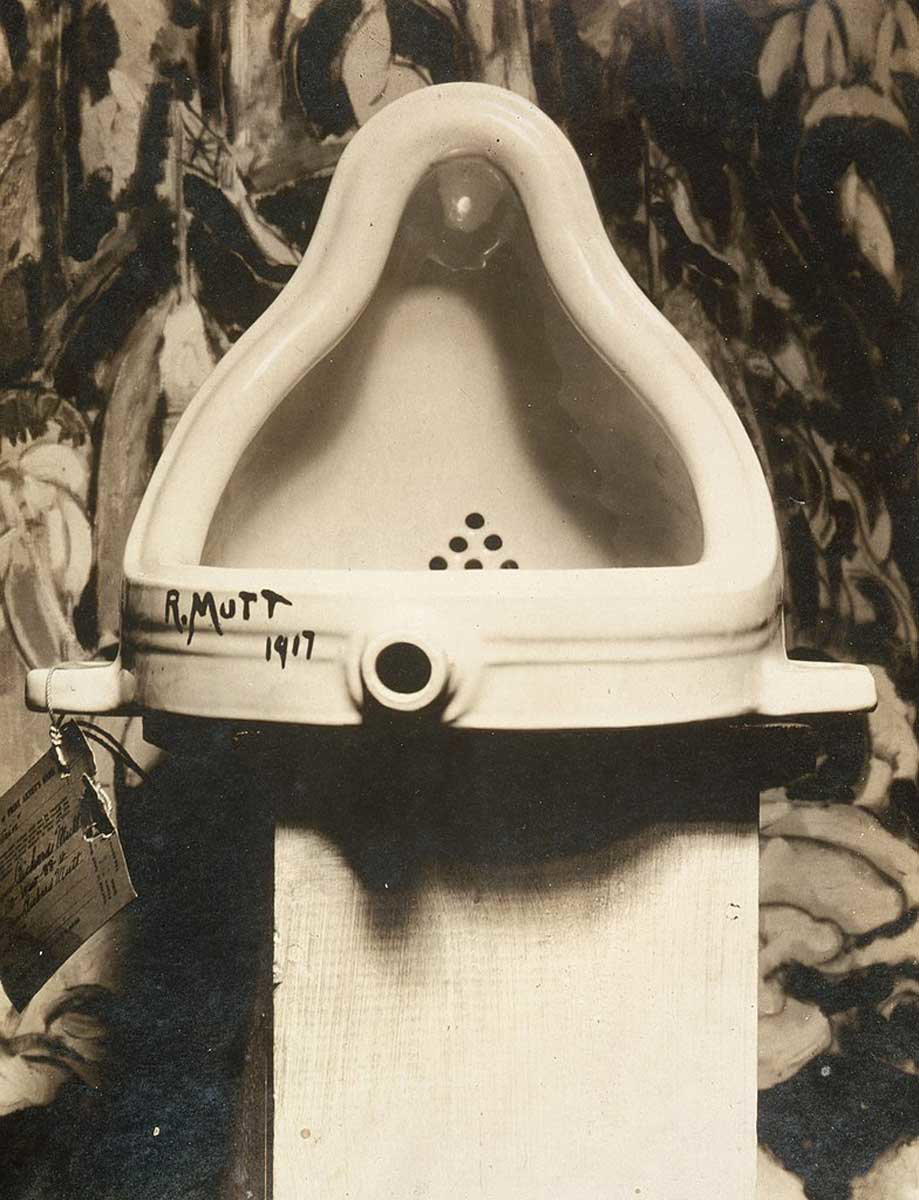
Take a manufactured urinal. Turn it on its side. Submit it for exhibition. The scandal that followed was the artwork: if a ready-made object can be art, what does the word even mean? Duchamp asked the question deliberately, and Dada — heir to the Incoherents' satire, aimed square at art-world elitism — made it a movement.
He openly detested painting that merely pleased the eye, dismissing it as "retinal." Art, he insisted, should serve the mind — a stance that effectively invented Conceptual Art decades before it had a name. The great irony: the movement that mocked elite art became the very definition of it.
Why this room mattersAfter Fountain, an idea could be the artwork. Every conceptual piece since stands on this porcelain.
Powered by Stafford Consulting
Room VII · The Frame Disappears Entirely
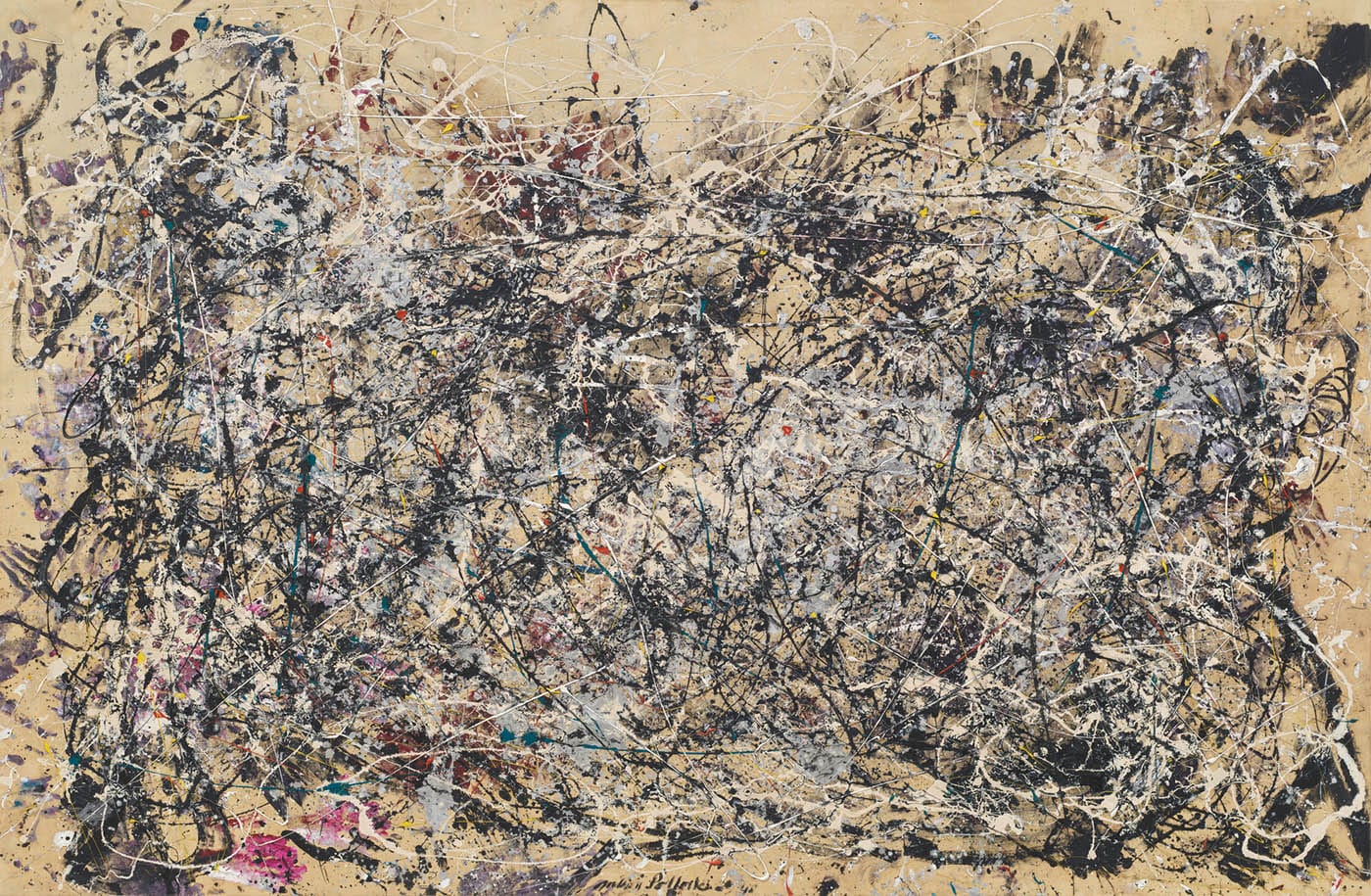
In a barn on Long Island, Pollock abandoned the easel, the palette, and the touch of brush to canvas. Raw, unprimed cloth went flat on the floor, and he moved over it with his whole body — flinging, dripping, pouring liquid industrial enamel from sticks, trowels, and stiff brushes. Near the top right edge he pressed his own paint-covered hands to the surface: a signature made of motion.
There is no focal point, no horizon, no hierarchy — just an even web of black, white, grey, and metallic paint that pulls the eye around forever. With it, Abstract Expressionism fully arrived, the art world's capital moved from Paris to New York, and the canvas became a record of action — opening the road to Happenings, Performance Art, and Minimalism.
The subconsciousIn treatment for severe alcoholism, Pollock's Jungian analyst had him draw to unlock the unconscious — a push that shaped his turn to abstract symbolism.
Powered by Stafford Consulting
Room VIII · The Old Subject, Detonated
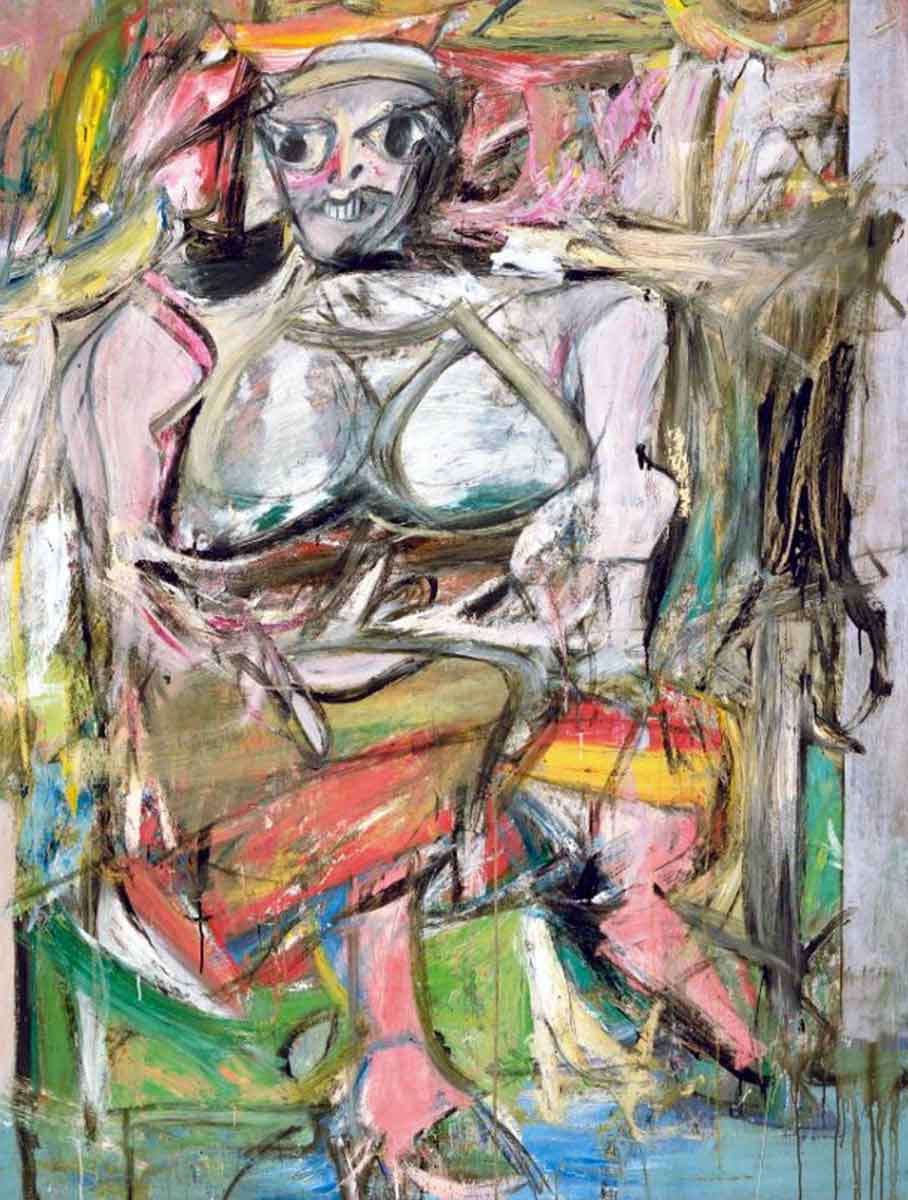
Don't confuse Kandinsky's Expressionism with this: Abstract Expressionism belongs to the 1940s and '50s and to New York, the new capital. De Kooning, a Dutchman looking back to van Gogh and Munch, took Europe's most traditional subject — the female nude — and put it through a storm.
The figure is grotesque and unsettling, reduced to raw parts; her pinks and greens drown under slashes of grey. Standing or seated? Clothed or bare? The form refuses to answer, and its disorder mirrors a post-war world. It's the same appropriating spirit as Sapeck's pipe or Duchamp's mustache, scaled to a whole genre — made by artists deliberately cutting loose from European tradition to forge a distinctly American art.
Two brutal yearsMost nights he scraped the day's painting down with a putty knife and began again the next morning over the ghost marks of the last.
Powered by Stafford Consulting
Room IX · The White Cube
One canvas for every variety Campbell's sold — thirty-two in all — rendered in synthetic polymer, partly screen-printed to mimic the cold precision of commercial graphics, and displayed on shelves the way a grocery store stocks goods. Where late Modernism worshipped heroic feeling and pure abstraction, Warhol aimed the lens at supermarkets, advertising, and mass production.
Irony. Repetition. Surface over depth. Appropriation. The soup cans flipped the switch from High Modernism toward Postmodernism — the room you entered this gallery through, now reached the long way around.
Trained in the tradeWarhol spent the 1950s as one of New York's top commercial illustrators, drawing shoes and ads — then used those exact skills to collapse the wall between commerce and the museum.
Powered by Stafford Consulting
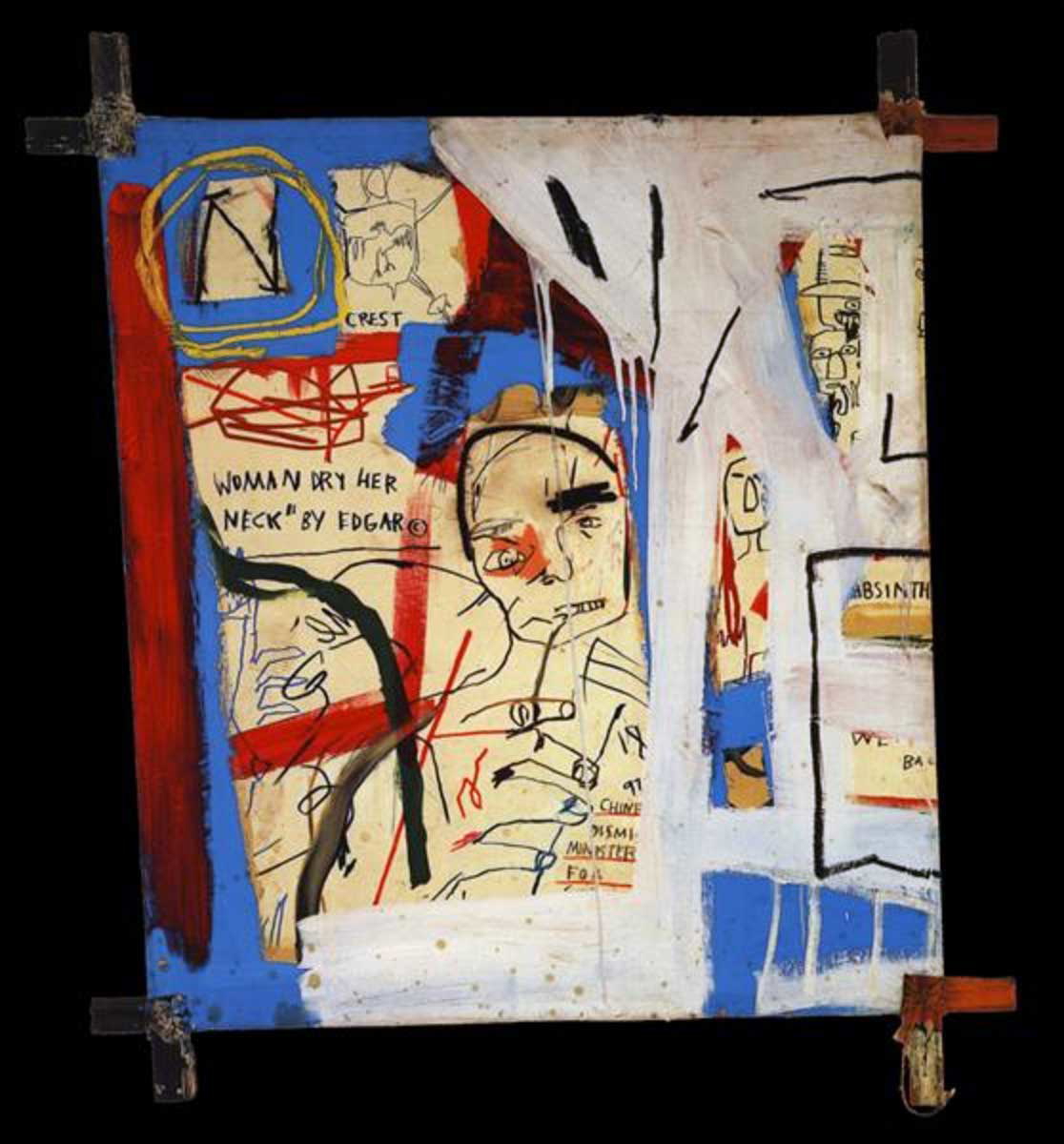
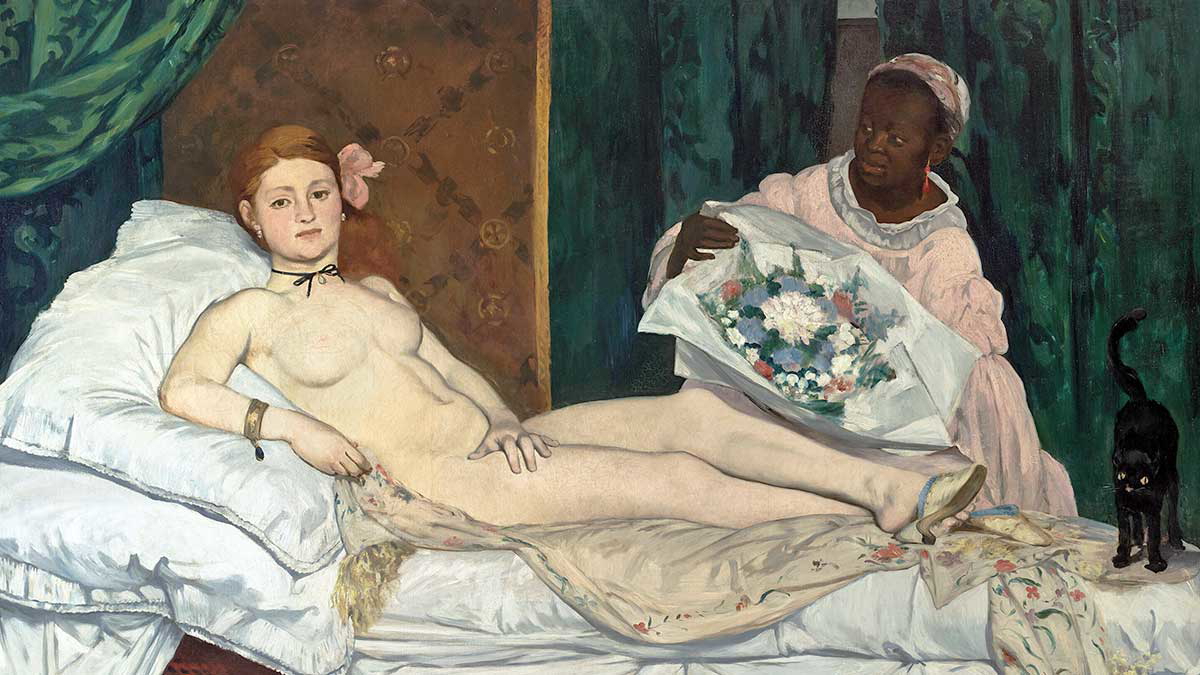
Olympia — É. Manet, 1863
Room X · Epilogue · The Loop Closes
Modernism informally ended around the 1970s; Duchamp and Kandinsky were household names, and the Cold War had rescrambled the world again. Basquiat did to Manet's Olympia — the scandalous nude that helped launch the whole century — exactly what Duchamp did to the Mona Lisa: seized its iconic status and remade it.
Where is Olympia here? A face floats mid-canvas, closer to de Kooning's woman — bald, raw, unsettling — than to Manet's courtesan. Abstraction pushed to the breaking point. Basquiat rejected Modernism's mainstreaming, reshaping its values through his experience as a Black artist in New York; his graffiti roots carried the same everyone's-invited spirit as the Incoherents' journals. He painted identity, not just bodies — evocative like the Expressionists, forcing you to interpret rather than observe.
Full circleDespite a 32-year age gap, Basquiat and Warhol became close collaborators in the mid-'80s — silkscreened corporate logos overlaid with slashing painted marks. The two ends of this hallway, painting together.
Powered by Stafford Consulting
Exit Through the Gift of Freedom
Strip away the shocks and the century tells one story: perspective, restraint, representation, craft — surrendered one gallery at a time, until artists and audiences held total freedom of expression. Without these ten works, every museum wall might still be chasing Leonardo. Beautiful, yes. But the Modernists broke the cycle so that each new work could show us something we hadn't seen before.
Powered by Stafford Consulting
Source: "10 Pivotal Artworks That Embody the Modern Art Movement" · Miles McMorrow · TheCollector
Artwork images via the museums and archives credited on each label